

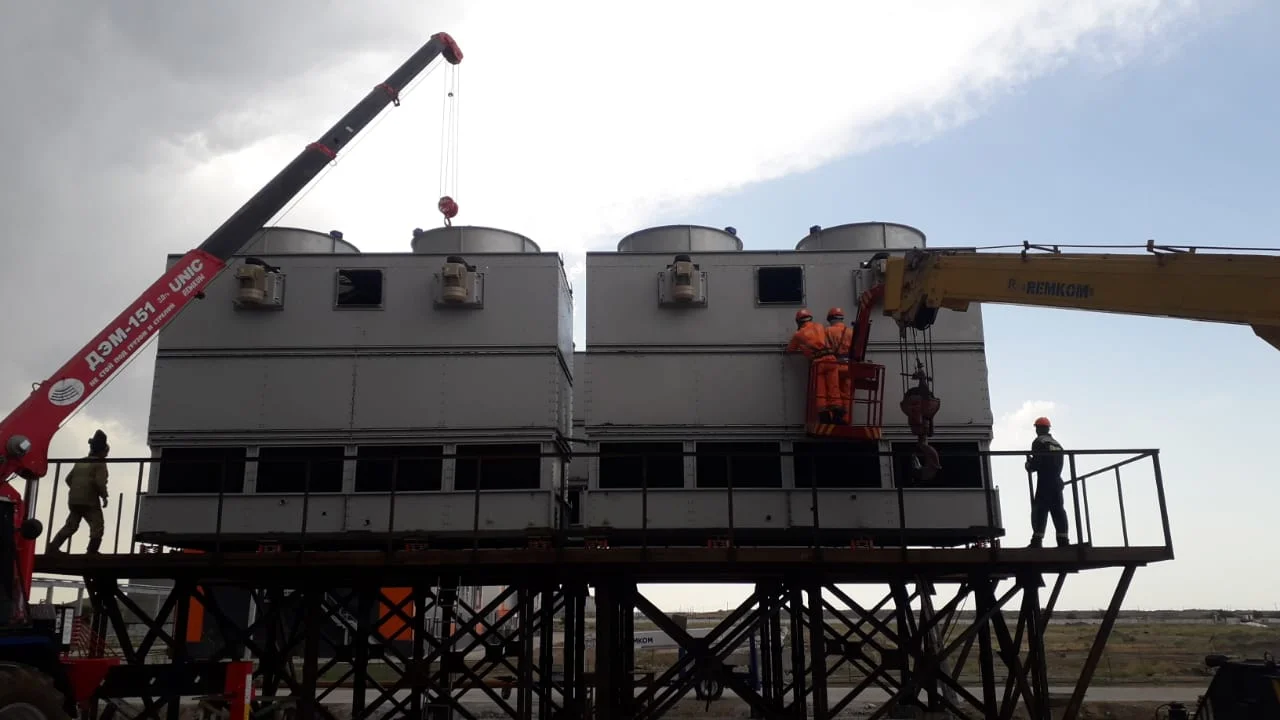
Cooling Tower operates based on the evaporation (evaporative cooling) principle. Heated water within the system comes into contact with air and releases its heat to the surrounding environment.
As a result of this process:
- The temperature of the water decreases
- The load on chiller systems is reduced
- Overall energy consumption is lowered
🔹 Impact on Energy Savings
A properly designed cooling tower provides the following advantages:
- 20–30% reduction in energy consumption
- Reduced energy demand on compressors
- Optimization of system pressure
- Lower long-term operational costs
This creates significant financial benefits, especially for large industrial facilities and shopping centers.
🔹 Impact on Chiller Performance
The performance of a cooling tower directly affects chiller efficiency.
Based on practical experience:
- A 1°C decrease in condenser water temperature
➡️ reduces chiller energy consumption by approximately 2–3%
This means even small optimizations can lead to substantial energy savings.
🔹 Importance of Proper Selection and Design
The efficiency of a cooling tower depends on правиль selection and proper design.
Incorrect selection can lead to:
- Increased energy consumption
- Higher water usage
- Reduced performance
A proper approach includes:
✔ Selection based on accurate heat load
✔ Energy-efficient fan systems
✔ High-quality fill media
✔ Uniform water distribution
🔹 Role in Sustainable Projects
In modern projects, energy efficiency and sustainability are key criteria.
Cooling towers:
- Are essential components for reducing operational expenditures (OPEX)
- Contribute to achieving “Green Building” standards
- Are considered long-term investments
🔹 Conclusion
A cooling tower is not just a piece of technical equipment, but also:
A strategic solution for energy savings, high performance, and long-term economic efficiency.
A properly selected and designed cooling tower reduces energy costs while increasing the overall value of the project.